India’s Other Modernisms: Regional Art Schools and Forgotten Masters (1880–1950)
When the history of modern Indian art is told, the story usually begins in Calcutta with the Bengal School and then jumps to Bombay and the Progressive Artists’ Group.
It is an elegant narrative.
It is also incomplete.
Between 1880 and 1950, modern Indian art was not shaped by a single movement, city, or ideology. It emerged from a network of regional art schools established across British India—institutions founded largely to serve the practical needs of empire but which unexpectedly became laboratories for artistic experimentation and cultural self-definition.
Stretching from Madras in the south to Lahore in the north-west, these schools trained generations of artists, craftsmen, sculptors, illustrators, architects, and designers. Many of their most talented graduates have since faded from mainstream art history, overshadowed by larger movements and more marketable narratives.
Yet without these institutions, the story of Indian modernism would look very different.
The Government School of Art in Calcutta, the Sir J.J. School of Art in Bombay, the Mayo School of Industrial Arts in Lahore, and the Government School of Arts and Crafts in Madras formed a loose but influential network that shaped artistic education across the subcontinent. Each developed its own character, responding to local traditions, economic realities, and cultural aspirations.
Together, they reveal that Indian modernism was never a single movement. It was a mosaic of regional experiments.
Madras: From Craft School to Modern Sculpture
The oldest of these institutions was the Government School of Industrial Arts in Madras, founded in 1850 by Dr. Alexander Hunter.
Originally intended to improve industrial production for colonial markets, the school trained students in pottery, metalwork, design, and technical drawing. Like many colonial institutions, its initial objective was economic rather than artistic.
Its transformation began in the twentieth century and accelerated dramatically under the leadership of sculptor Devi Prasad Roy Chowdhury.
Few artists occupy a more important place in South Indian art history.
A student of Abanindranath Tagore, Roy Chowdhury combined Bengal’s artistic sensibilities with a strong commitment to sculptural realism. When he became principal in 1929, he reshaped the institution and encouraged students to think beyond craft production.
His monumental sculptures, including Triumph of Labour in Chennai, remain among the most significant public sculptures produced in modern India.
The artists who followed him would eventually lay the foundations for the Madras Art Movement, one of the most original developments in post-Independence Indian art.
Names such as K.C.S. Paniker, S. Dhanapal, P.V. Janakiram, L. Munuswamy, and K.M. Adimoolam emerged from this environment, combining local traditions with modernist experimentation.
Today, however, many collectors remain unfamiliar with the institutional history that made their achievements possible.
Lahore: The Workshop of Northern India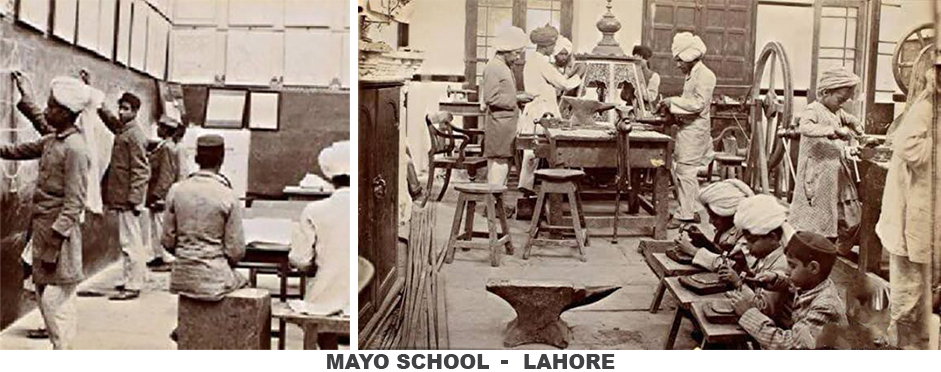 If Madras represented the southern frontier of colonial art education, Lahore occupied a unique position in the north.
Founded in 1875, the Mayo School of Industrial Arts reflected the philosophy of its first principal, John Lockwood Kipling.
Unlike many colonial administrators, Kipling recognised the value of indigenous craftsmanship and resisted imposing purely European artistic models. Instead, he encouraged the study of local traditions including wood carving, metalwork, architecture, and decorative arts.
The school became deeply connected to the Lahore Museum and emerged as one of the most important centres of artistic training in northern India.
Among its most remarkable figures was Bhai Ram Singh, architect, designer, educator, and one of the pioneers of Indo-Saracenic design.
Later, under the leadership of Samarendranath Gupta, a student of Abanindranath Tagore, the institution absorbed aspects of the Bengal School while retaining its distinctive regional identity.
Artists such as Allah Bux, Abdur Rahman Chughtai, B.C. Sanyal, and several known Punjabi painters emerged from this broader milieu.
Particularly significant was Chughtai, whose elegant synthesis of Mughal aesthetics, Persian influences, Art Nouveau, and Bengal School techniques created one of the most recognisable artistic styles in South Asia.
Today he is celebrated in Pakistan but remains surprisingly under-discussed within mainstream narratives of Indian modernism.
Bombay: Academic Realism and the Forgotten Masters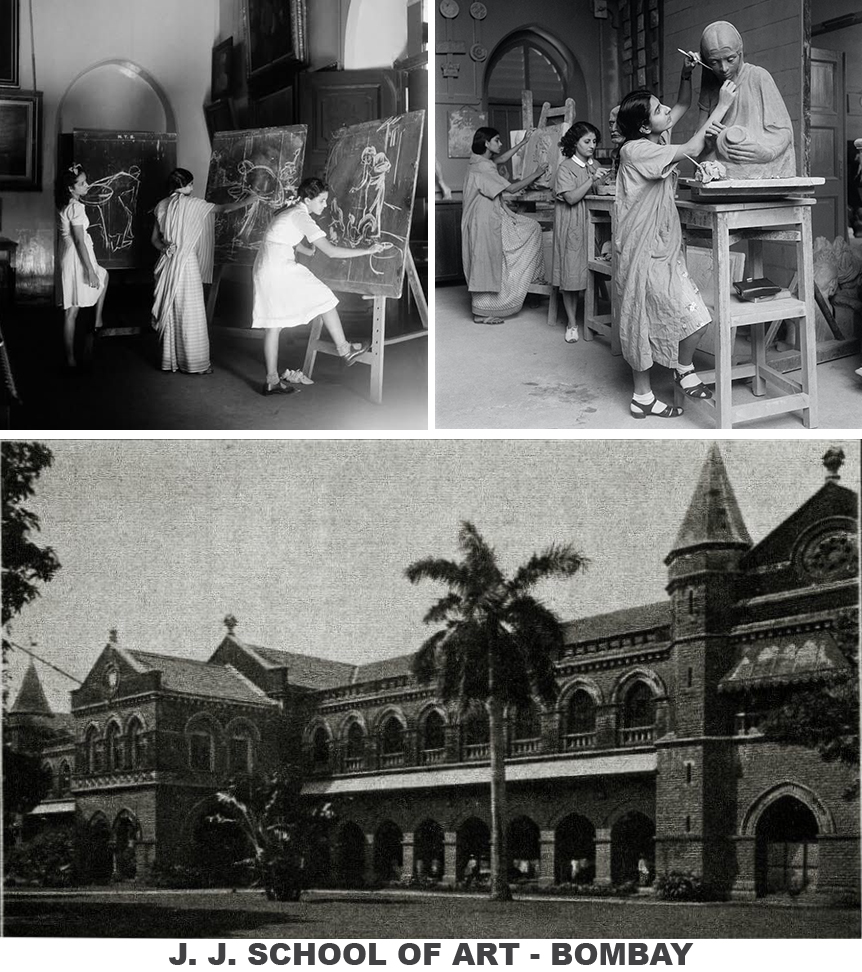
No institution has suffered more from historical over simplification than the Sir J.J. School of Art.
Because Indian art history became heavily influenced by nationalist narratives during the twentieth century, artists trained in European academic realism were often dismissed as colonial imitators.
This judgement has proven increasingly unfair.
Founded in 1857 through the philanthropy of Sir Jamsetjee Jeejeebhoy, the school played a central role in shaping Bombay’s visual culture.
Its students contributed to the ornamentation of public buildings, architectural decoration, and urban design during the city’s rapid expansion.
More importantly, it produced some of the finest painters working in India during the late nineteenth and early twentieth centuries.
Antonio Xavier Trindade stands among the most accomplished. Sometimes described as the “Rembrandt of the East,” his portraits and genre scenes reveal extraordinary technical mastery, subtle psychological observation, and a sophisticated understanding of light.
Alongside him worked artists such as Pestonjee Bomanjee, M.V. Dhurandhar, Baburao Painter, and S.L. Haldankar.
Many of these artists documented everyday Indian life with remarkable sensitivity while simultaneously achieving standards comparable to leading European academicians.
Their rediscovery remains one of the most important unfinished projects in Indian art history.
Calcutta: Beyond the Bengal School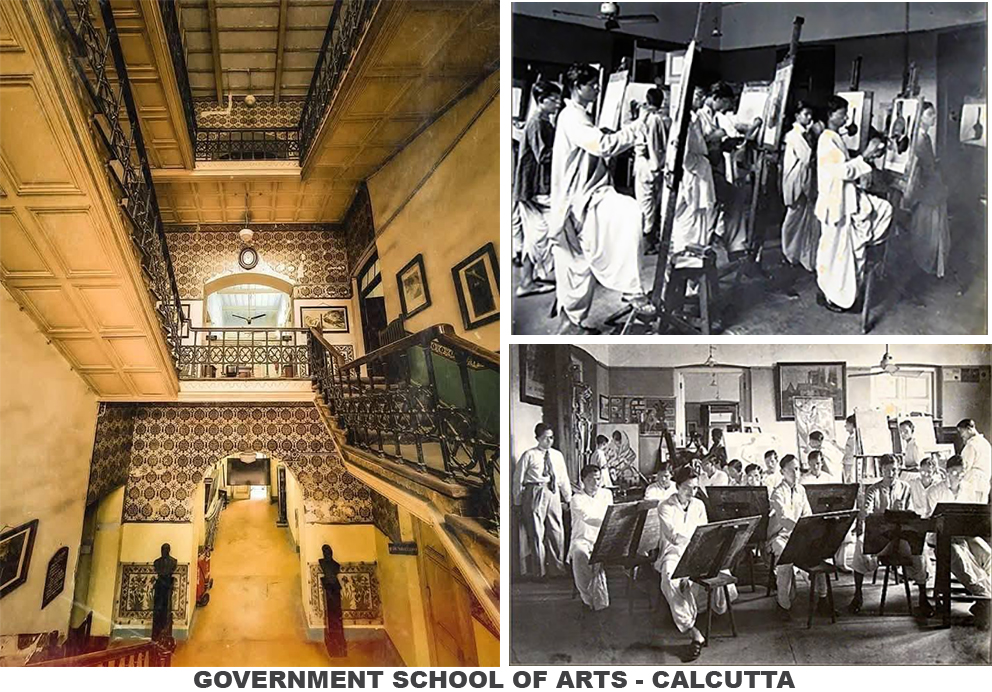 No regional school has received more attention than Calcutta’s Government School of Art.
Yet even here, significant histories remain overlooked.
Before Abanindranath Tagore transformed the institution into the centre of the Bengal School movement, the school functioned largely as a training ground for lithographers, draftsmen, commercial artists, and technical illustrators.
The broader artistic ecosystem surrounding nineteenth-century Calcutta produced an extraordinary but largely forgotten body of work now often described as “Early Bengal Oils.”
These paintings occupied a fascinating space between indigenous traditions and European techniques.
Created for Bengali, Gujarati, Marwari, and other mercantile patrons, they depicted Hindu deities, mythological scenes, historical subjects, and devotional imagery using oil paint, canvas, and forms of realism derived from European academic art.
Artists such as Bamapada Banerjee, Shashi Kumar Hesh, Hemendranath Majumdar, Atul Bose and several anonymous studio painters emerged from this wider ecosystem.
Many remain insufficiently studied.
Their works challenge the assumption that Indian modernism emerged solely through rejection of European influence. Instead, they reveal a more complex process of adaptation, negotiation, and hybridisation.
Rethinking Indian Modernism
The four great regional art schools of British India were created to serve the needs of empire.
Ironically, they helped nurture the artistic confidence that would eventually challenge imperial assumptions.
Each institution developed its own visual language.
Madras embraced sculptural modernity and craft traditions.
Lahore cultivated a synthesis of indigenous design and modern aesthetics.
Bombay refined academic realism and portraiture.
Calcutta became a site of both nationalist revivalism and commercial experimentation.
Together they demonstrate that modern Indian art did not emerge from a single source.
It emerged from dozens of conversations taking place simultaneously across the subcontinent.
Today, as scholars, collectors, and institutions increasingly revisit neglected archives and forgotten artists, these regional schools are beginning to receive the attention they deserve.
Their rediscovery reminds us that art history is never fixed.
It is continually rewritten.
And some of its most important chapters remain hidden in plain sight.
The future of Indian art scholarship may depend not on studying the artists we already know, but on recovering those we have forgotten.
_______________________________________________________________________________________________________________________________________________________________________
Research & Compiled by Aakriti Art Gallery team
Comments
Join the Discussion
Please login to post comments.
Login